










When I walked into the theater with my mom on March 20, 2026 to see some kids movie that I just discovered existed that morning, I had no idea what to expect. But by the time the credits rolled, I had laughed, cried, and gasped out loud too many times to count. Leaving the theater that night, I was sure I had seen one of the funniest, most emotional, and most peculiar movies I had seen in a while, with an underlying message– (although this was Disney: of course it was extremely watered down)– critical to today’s political climate.
Now if you want spoilers, continue on. I’ll start with the plot, which was quite a whirlwind on its own. The story is set in a town called Beaverton, and it starts with the main character, Mabel Tanaka, a 19-year-old college student, and her grandmother, who cultivates in her an appreciation for the nearby forest glade filled with wild animals. Soon, she is left to watch over the glade all by herself, as her grandmother dies. Even though I definitely saw this coming, it still had me quite emotional.
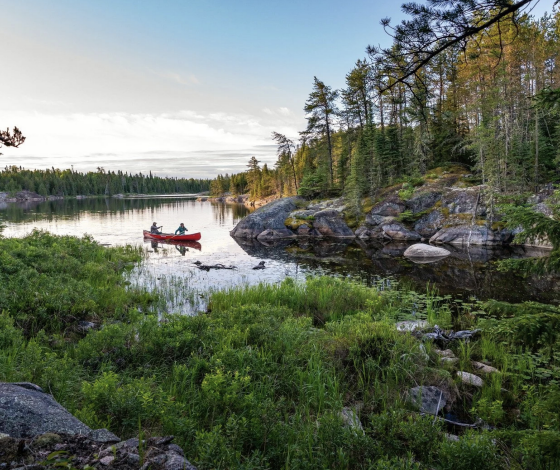
The glade becomes threatened by Mayor Jerry, who plans to build a freeway through the glade, claiming it was vacant of all wildlife. I’ve definitely seen quite similar examples of this dilemma in real life. Mabel tries to get signatures from the city to stop the freeway construction, but she fails to get even a single one. While trying to lure animals back into the glade, she discovers that her professor has secretly developed a new “Hoppers” technology that allows humans’ brains to be transferred into realistic animal robots. Despite her professor’s warnings, she “hops” into beaver-form and discovers that Jerry had placed an artificial tree that emits sound waves only animals could hear, scaring them away from the glade so he could build his freeway. She successfully takes down the tree and the animals return to the glade, only for Jerry to build even more artificial trees.
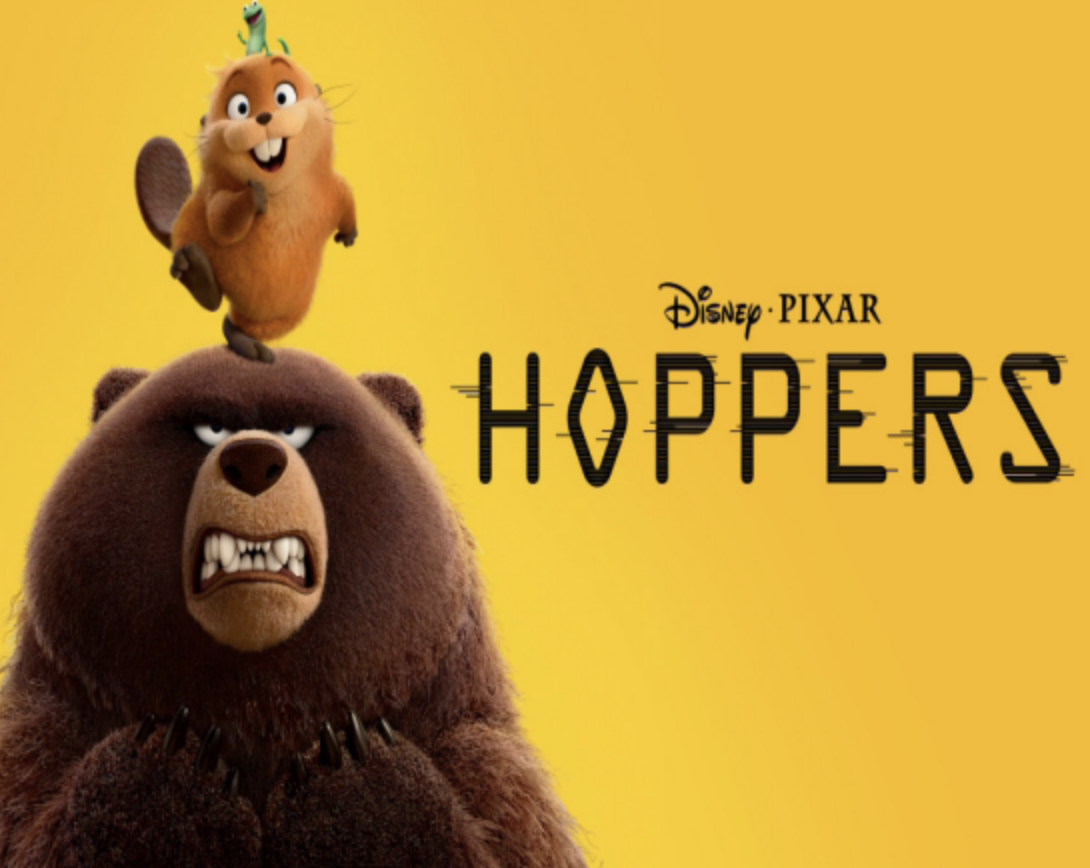
Up until this point, Mabel is extremely reactionary and not grounded in any type of real ethical or political purpose– she just acts upon her own interest (protecting her glade), but not for the greater, collective good. This is until she meets Mammal King George– the most BASED character in the whole movie. George is a man of the community– he takes in all refugee animals, knows everyone by name, and his “Pond Rules” ensure everyone is treated with dignity and respect. He teaches her that real change within systems of oppression can only be achieved through collective action and organization.
George arranges a meeting with the Animal Councils– Insect, Amphibian, Fish, Reptile, and Bird– to figure out what to do about Mayor Jerry and his terrible trees. However, the heads of these Councils plan to kill, or what they call “squish”, Jerry, which Mabel and George are opposed to. However, when the butterfly Insect Queen, head of all Councils, flies around Mabel to yell at her, Mabel instinctively “squishes” the Insect Queen and kills her. I actually gasped out loud when this happened. I think everyone else in the audience did as well. And this was the point where the movie goes absolutely off the rails.
Now all of the Animal Kingdom is enraged at Mabel and George, so they flee the scene and try to save Jerry. They sneak into his car and try to warn him of his impending death using text-to-speech on his phone. Yes, two beavers were typing on a phone, trying to save Mayor Jerry. I couldn’t stop laughing. This eventually leads into a car chase, where on behalf of the Council, seagulls make many failed attempts to drop a ginormous great white shark onto Jerry to “squish” him. I truly had never seen anything like this.
The car crashes, and the professor steals Mabel to take her back into her human form, separating her from George and leaving him confused and saddened. She and Jerry wake up tied up in the professor’s lab, where it is revealed that the dead Insect Queen’s son, an evil caterpillar named Titus, has taken over the lab and used Hoppers technology to transform into a human form of Jerry. Titus, acting as Jerry, starts a political rally in the community, where he plans to “squish” all the humans who attend using the artificial tree technology.
Although all hope may seem lost, Mabel and Jerry learn they must work together to get untied from their chairs in order to save the innocent civilians. Despite their contentious pasts, they find a way to escape the lab and take down Titus, disguised in human-form. Amongst the chaos, a wildfire breaks out, and the animals sacrifice the water from the dam they had worked so hard to build up to save the humans from the fire before it reached the city. In the end, the glade is safe and the freeway is rerouted. George and Mabel remain friends, and they use text-to-speech to communicate. I’ll admit it: I was very touched by the ending. It was devastating to see the dam get destroyed, but heartwarming that the animals would be so selfless.
With all the surrealist humor and unbelievable plot twists, I think this movie also carried an important message that was pretty digestible for younger kids and adults alike. It started with a young person– a young woman, not too much older than most of us at Breck even– angry at the policies her government was implementing. She kept failing and failing, until she realized that she couldn’t keep working on her own: she needed to find a community, friends, and anything else necessary to organize effective change. She was able to work with local leaders who she had a rough past with, and she put aside any differences that would cloud her judgement. And most importantly, she never gave up. All of these lessons I think are essential in today’s day. I see many people my age, angry at what’s happening around them, but either they don’t know how to create change, think they are helpless in trying, or simply choose not to.
I do have my critiques, though. I think it was unrealistic that Mabel was unable to get any signatures throughout her whole city, since so many people in real life definitely DO care about the environment. This kind of gave off the message that activism and going out into the community is pointless. However, I understand that that part may have been just to drive the plot forward. I also think that outside of local government and on a greater level, the “just compromise”, or “this-is-too-radical-so-we-can’t-do-it” messaging can be harmful, especially when it comes down to when the quality of lives are at stake. I think that when necessary, measures need to be taken to ensure that change is accomplished, no matter what it takes.
Overall, I really enjoyed this movie. It was an original and quite a unique story, and there were specific visuals that really brought it to life. I think it was well done in empowering younger audiences to take action in their communities by collectively organizing, educating those around them, and working with their local governments. I’m sure it had its limitations with Disney or Pixar in terms of the extent of its messaging, but for the most part, it had an important moral message for all of us to learn.