

















Since September 2, 2025, there have been 21 strikes on boats in the Pacific Ocean and Caribbean Sea, killing at least 83 people. This has been a weekslong campaign in Latin America of strikes on boats that the Trump administration accused of trafficking narcotics by sea. President Trump has targeted a number of drug cartels as “narco-terrorists,” and he has labeled them as enemy combatants. In doing this, he has asserted the power to “determine,” without authorization from Congress, that these drug cartels, as well as those who work for them, can be killed at will.
A broad range of experts in laws governing the use of armed force have said that these strikes are illegal, as the military is not permitted to deliberately target civilians who aren’t directly participating in armed hostilities, including criminal suspects. Also, the Trump administration has not provided any public evidence about the presence of narcotics on the boats struck or any evidence about their affiliation with drug cartels.
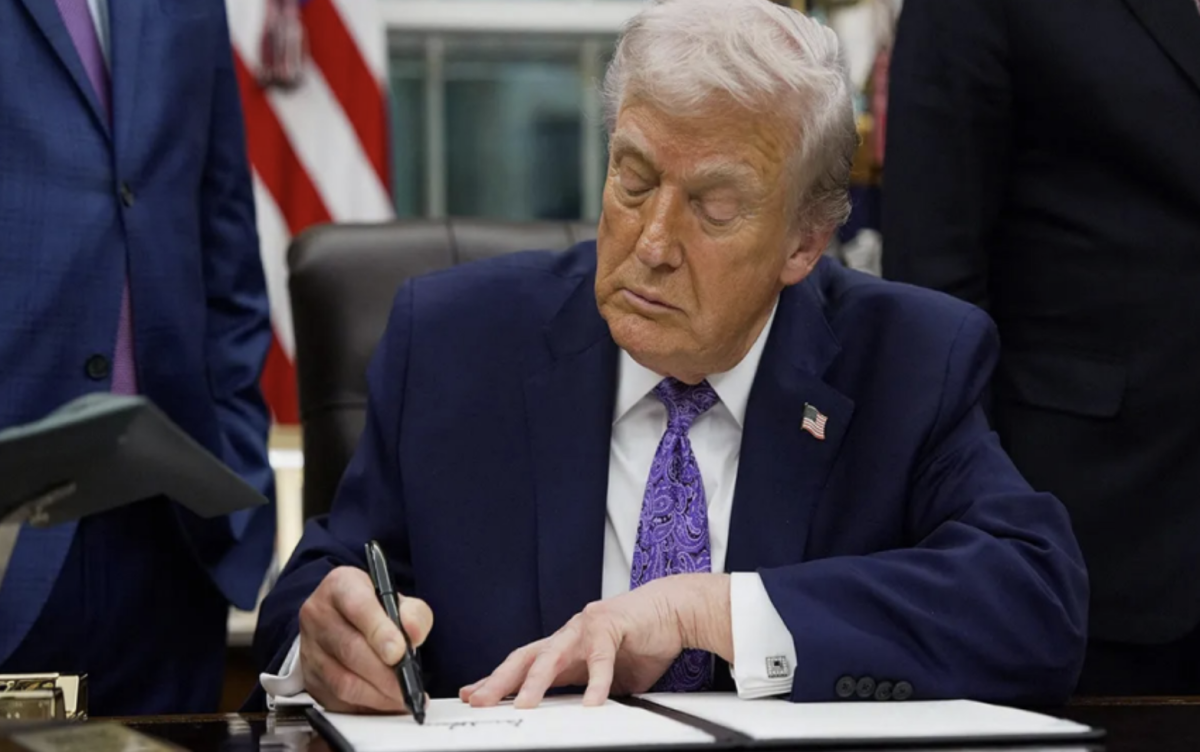
President Trump is using the military without any clear legal precedent, and in doing this, he is violating both domestic and international law. First, the War Powers Resolution of 1973 states that the president has to consult with Congress before committing troops into conflict and to inform Congress within 48 hours of introducing troops into hostility. President Trump has not consulted with Congress on this matter, which is a clear breach of checks and balances. Although the president is the Commander in Chief of the Army and Navy, he does not have the power to declare war; Congress does.
Next, International Human Rights Law limits states’ ability to use armed forces except for when a person poses an imminent threat to life, and it limits extrajudicial killings, which are the deliberate killings of people without the legal authority or due process of a judicial proceeding. These strikes clearly violate these laws, as the Trump administration has no legal authority to commit these strikes, and the people on the boats do not pose an imminent threat to life.
Volker Türk, the United Nations High Commissioner for Human Rights, stated, “These attacks – and their mounting human cost – are unacceptable. The US must halt such attacks and take all measures necessary to prevent the extrajudicial killing of people aboard these boats, whatever the criminal conduct alleged against them.” He also stated that there is “no justification in international law” for these attacks.
President Trump has falsely claimed that each destroyed boat saves 25,000 American lives. While it is true that 100,000 Americans die each year from drug overdoses, these are mostly from fentanyl, which is produced in Mexico. South America produces cocaine, so striking boats from Venezuela is not saving 25,000 American lives.
This military campaign raises regional tensions and represents a major shift in US policy, as maritime drug smuggling has long been treated as a law enforcement matter. Police are supposed to arrest criminal suspects for prosecution, not gun them down, except when they pose an imminent threat to life. In labeling drug cartels as “terrorists,” President Trump has redefined the peacetime criminal problem of drug trafficking as an armed conflict. However, trafficking an illegal consumer product is not a capital offense, and Congress hasn’t authorized the use of armed conflict against the cartels.
These strikes are a clear example of executive overreach from the Trump administration. These attacks have no legal justification, and lawmakers have largely been left in the dark about the operations. These strikes have escalated President Trump’s use of military power in ways that were previously understood to be off limits.
Categories:
OPINION: Boat Strikes in Pacific and Caribbean Demonstrate Executive Overreach
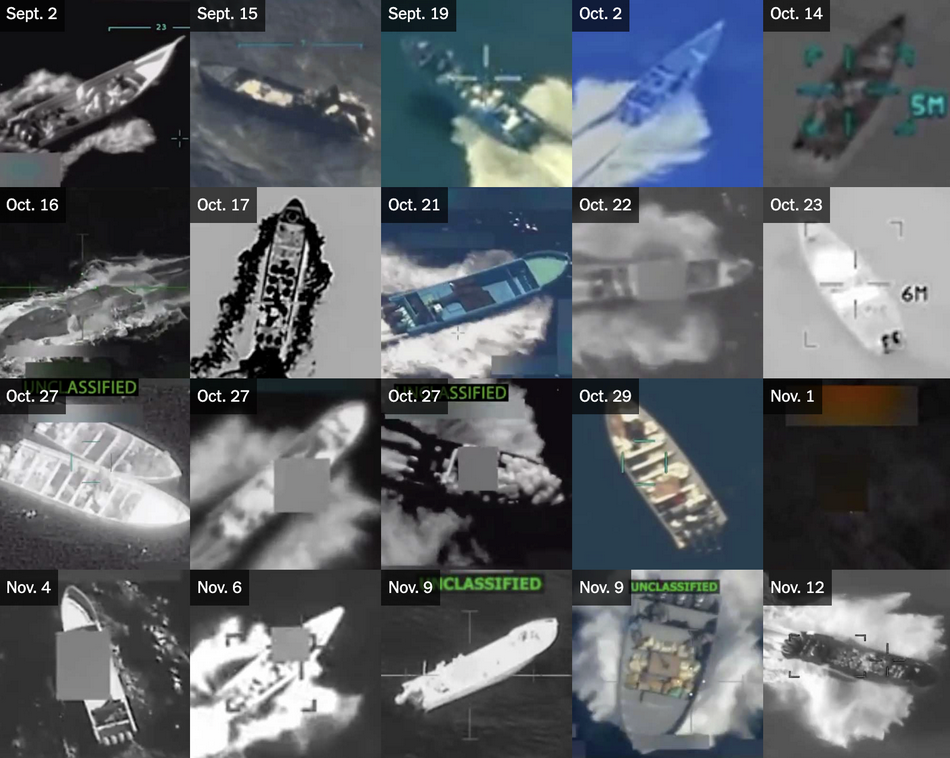
Timeline of the Strikes in the Pacific and Caribbean. Credit: New York Times.
More to Discover