















Greenland has been part of the Danish Kingdom for over 300 years, but President Donald Trump has repeatedly challenged Denmark’s claims to Greenland in the past year, in spite of the decades-old agreements the United States has signed with Denmark that recognize Denmark’s close connection to Greenland. In 2004, the US explicitly recognized Greenland as “an equal part of the Kingdom of Denmark” in an amendment to an older defense pact that grants the US broad military access. Furthermore, in 1916, Denmark sold the now US Virgin Islands to the US, and in the treaty for that deal, there is a clause that reads, “The United States of America will not object to the Danish Government extending their political and economic interests to the whole of Greenland.”
In the past year, Trump has repeatedly vowed to “get” Greenland, but Denmark has repeatedly rebuffed him, stating it does not have the authority to sell the self-governing territory of Greenland, and that its inhabitants will decide their fate. Polls demonstrate that an overwhelming majority of Greenlanders strongly oppose joining the US.
Trump has framed the acquisition of Greenland as essential for US national security, and he has suggested that military force could be deployed to acquire Greenland if it can’t be purchased. However, Danish Prime Minister Mette Frederiksen has said that a US attack on the territory would end NATO, the military alliance that both Denmark and the US were founding members of after World War II. Trump has also floated the idea of tariffs; on January 15, he stated, “I may put a tariff on countries if they don’t go along with Greenland because we need Greenland for national security.”
Seven of Europe’s top leaders defended Greenland in a joint statement on January 14, stating that security in the Arctic must be “be achieved collectively, in conjunction with NATO allies including the United States, by upholding the principles of the U.N. Charter, including sovereignty, territorial integrity and the inviolability of borders.”
In a guest essay in the New York Times, Alain Berset, the secretary general of the Council of Europe, wrote, “What’s at stake is not only Greenland’s sovereignty, but also trust. Alliances rest on predictability and on the expectation that power, especially allied power, remains bound by law. If international law can be set aside when it becomes inconvenient, trust is gone. If strategic calculations lead to a disregard for sovereignty in Greenland, how will Europe continue to believe in U.S. commitments elsewhere?”
Trump’s repeated threats on Greenland show a dangerous shift in US foreign policy away from international law, and instead towards desire for power. Trump has also said he is constrained only by his “own morality,” not international law. In wake of recent US actions in Venezuela, it is clear how quickly Trump’s threats can become actions. The consequences of US military action in Greenland could be detrimental to Greenland, the US, NATO, and the very foundations that keep the world standing.
Categories:
President Trump’s Attempted Takeover of Greenland
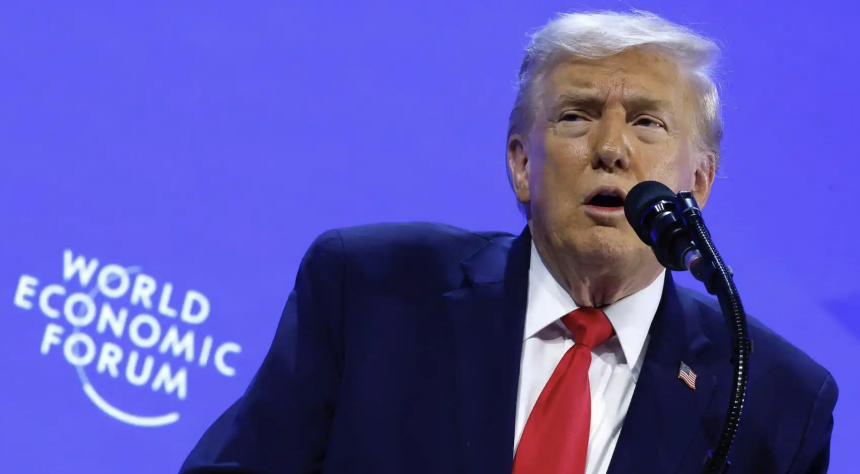
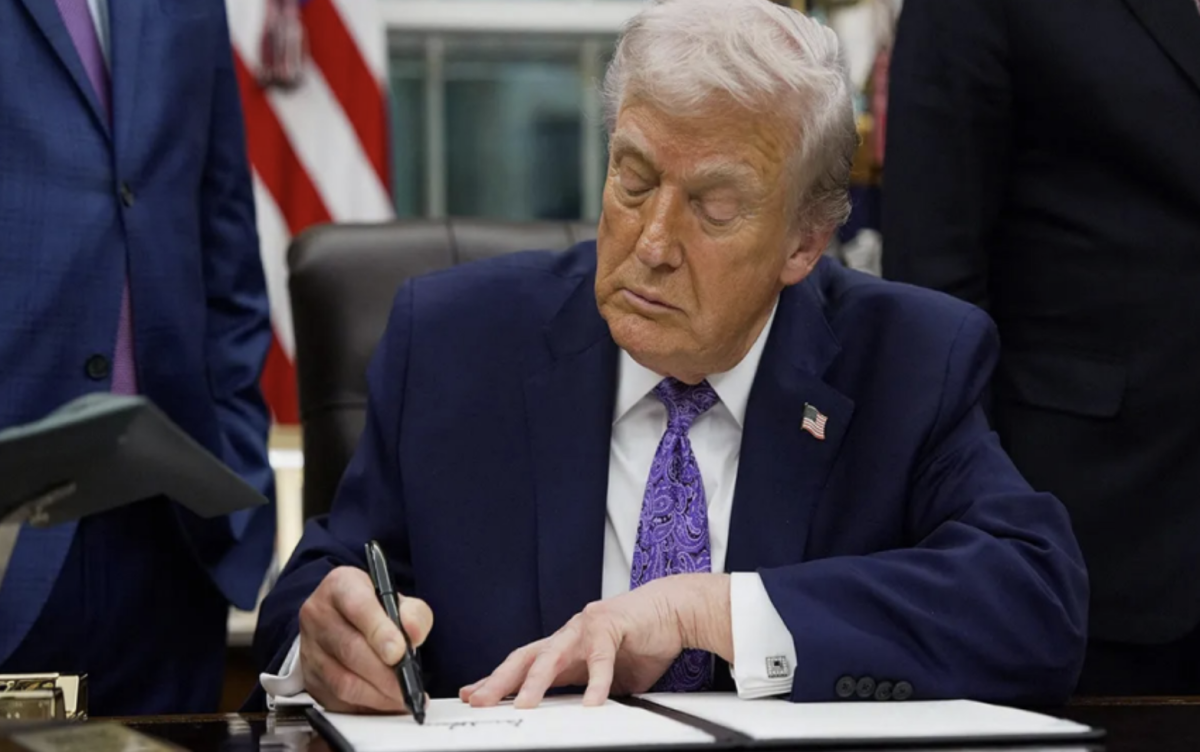
President Trump at the World Economic Forum in Davos Switzerland. Image from Brookings.
More to Discover