












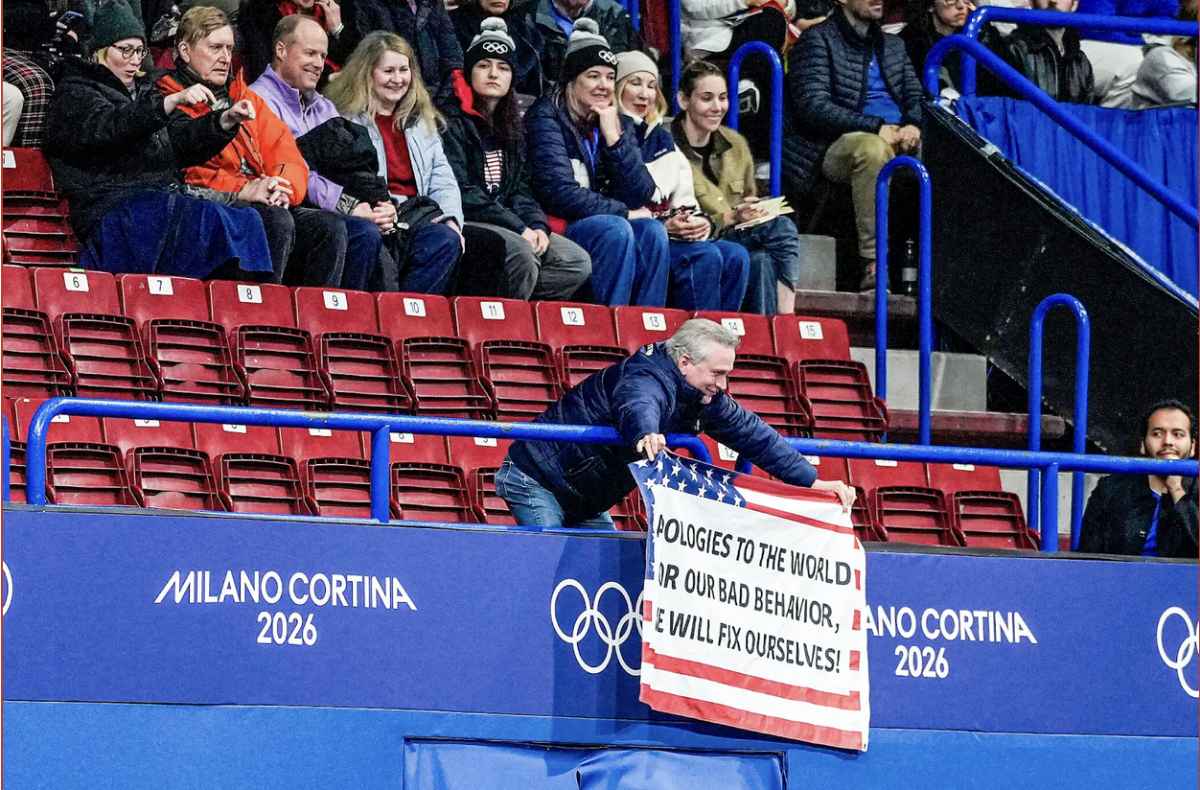
During the opening ceremony of the Olympic Games in Milan, jeers and boos rippled through the stadium while Vice President JD Vance was shown on screens when the U.S. team paraded in. The Milano Cortina Olympics of 2026 saw an unprecedented number of American athletes speaking on the state of politics in their home country. However, this is far from the first time that politics have become entangled with the Olympics.
The International Olympic Committee (IOC) claims that the Olympics are a neutral ground, and has tried to limit political demonstrations and displays at the Games. The basic framework of what is now known as Rule 50 was introduced in 1975, which stated that “every kind of demonstration or propaganda, whether political, religious or racial, in the Olympic areas is forbidden”. Note the inclusion of racial demonstrations in this language. This inclusion is very possibly an attempt to restrict Black athletes who used the 1968 and 1972 Games to promote racial justice. Rule 50 was designed not to remove politics from the Games, but to control how politics are expressed.
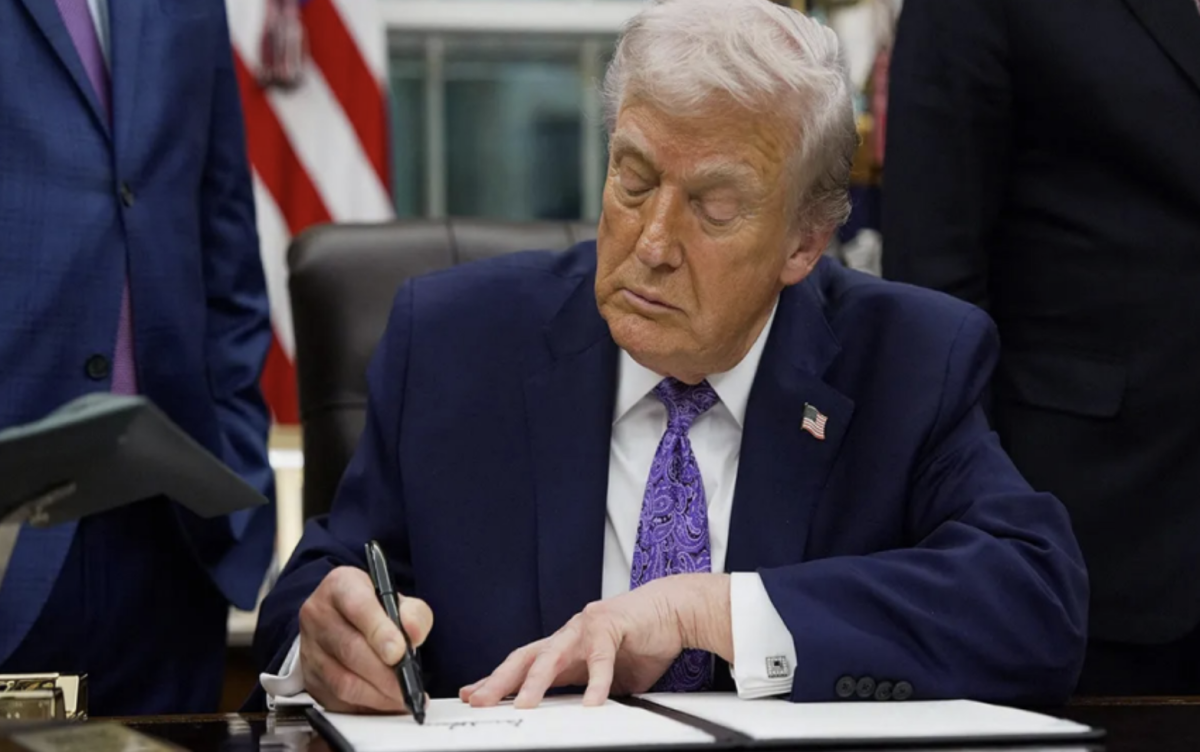
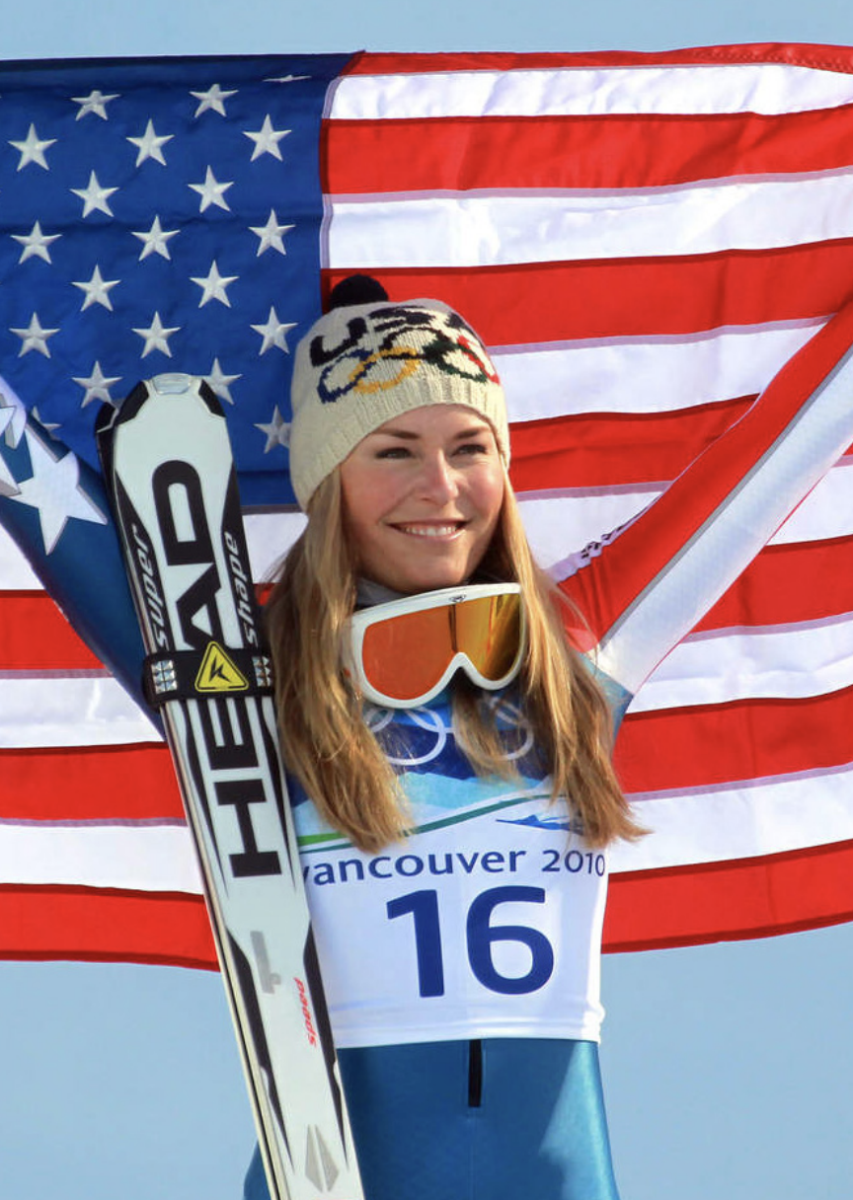
During this year’s Winter Games, many American athletes have voiced their opinions about the U.S. political situation. Hunter Hess, a skier from Oregon, told reporters that he had “mixed emotions” about representing the United States at these Games. He said, “There’s obviously a lot going on that I’m not the biggest fan of. Just because I’m wearing the flag doesn’t mean I represent everything that’s going on in the U.S.” The comments enraged President Trump, who called Hess “a real Loser” in a post on his social media site, Truth Social.
On the other hand, the IOC has suspended Russia’s Olympic Committee and supported bans on Russian and Belarusian teams following the 2022 invasion of Ukraine. In an interview with a Russian NHL player who wasn’t able to attend the Olympics this year, San Jose Sharks defenseman Dmitry Orlov said, “I mean, it’s politics and sports. I cannot say anything, you know? It is what it is. It’s not our decision. So we just take it how it is and keep living”.
Meanwhile, the United States has not formally declared any wars, but it has launched a military strike in Venezuela, among other interventions. This, obviously, is nowhere near the scale of the Russian-Ukrainian war, but it proves that the U.S. is far from being conflict-free. If only banning certain nations over geopolitical conflicts is acceptable, then the Olympics are straying far from political neutrality.
However, athletes have strived to separate themselves from the politics of their countries. The Olympics have a long history of countries using their athletes as a platform to build soft power. Some Americans don’t wish to be associated with the actions of their government, yet still see Russian athletes as extensions of their government. Of course, there are both Russian athletes who support and do not support the Russian government’s actions, but the same applies to athletes in the United States. Americans can’t uphold a double standard and attempt to be seen as an exception. The Olympics were never politically neutral, but athletes are not the decision-makers in their governments, regardless of whether they support it or not. If Americans wish to be disconnected from U.S. politics, then we must treat other countries with the same respect.