














The second annual Sunshine Sale began on Wednesday, April 8, 2026 and ran through Friday, April 10, 2026. Following the success of its 2025 debut, the event returned with stronger anticipation from the Upper School student body—along with a different goal. Collection began the previous week and students who donated clothes received “store credit,” allowing them to get free clothing during the sale. Students who helped run the sale also benefited from this service for free clothes exchange. This system encouraged not only participation but also engagement in a more circular model of consumption (rather than a linear model where one buys clothes and then throws them out to go to landfills).
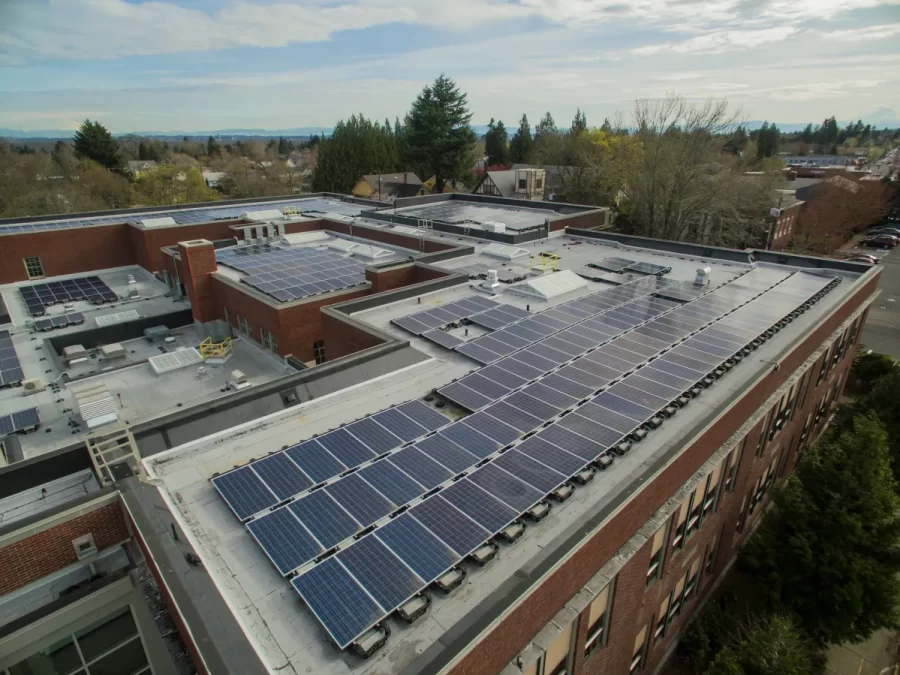
Organized by London Fehr ‘26, as a part of her Climate Action Community Partnership passion project, the Sunshine Sale is rooted in a commitment to sustainable fashion. While last year’s sale focused on raising funds to support the installation of solar panels at Breck, this year’s sale emphasized sustainability awareness. Though only $33 was recorded via cash (Venmo has not been counted yet), the financial outcome was not the primary measure of success. Instead, Fehr aimed to demonstrate how accessible and impactful sustainable choices—like thrift sales and clothing swaps—can be for students. That shift is focus was certainly reflected in the results. While fewer donations were collected this year—largely because the sale was not open to parents—the quality of items was notably higher. Quality in this case refers to how likely students are to actually purchase the item and wear it throughout the year as well as where the item came from (fancier brands vs brands like SHEIN). More importantly, many pieces of clothing were exchanged among students rather than discarded.
Nonetheless, the process was not without its challenges. Organizing the event posed logistical difficulties including locating a space, determining prices, managing leftover clothing, and recruiting volunteers. As thrifting grows in popularity, thrift stores find themselves overwhelmed with donations and end up discarding many of the received donations. Because of this, Fehr found difficulties in finding places to accept all the extra donations from the Sunshine Sale. Additionally, shifting student interests were a roadblock because, as Fehr noted, students are more often drawn to food-based sales rather than a clothing-based sale.
Looking ahead, Fehr sees opportunities for improvement. Establishing a more consistent structure year-to-year could streamline the planning process and make the event more sustainable in itself. She also expressed interest in extending the event (potentially to a full week). At the same time, she believes certain aspects should remain the same. Limiting the sale to Upper School students and faculty/staff helped ensure items were desirable and relevant, and keeping the timing after Environmental Day appeared to boost participation, Fehr believes.
Fehr is optimistic about the future of the Sunshine Sale and hopes it will continue in the coming years. With support from students in 10th and 11th grade, there is a clear pathway toward continuity. As the event evolves, it has an opportunity to become a staple of the Breck Upper School student experience. The Sunshine Sale reinforces the importance of commitment to community and sustainability.