














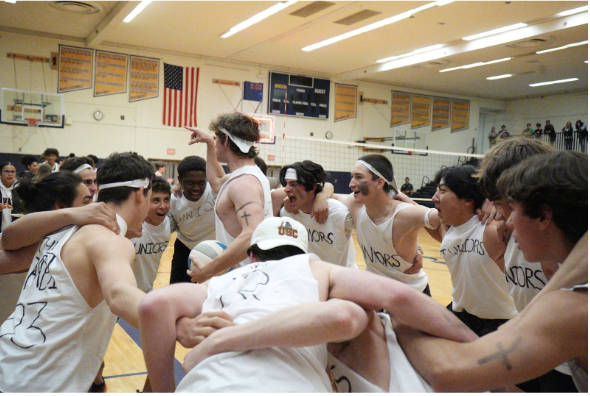

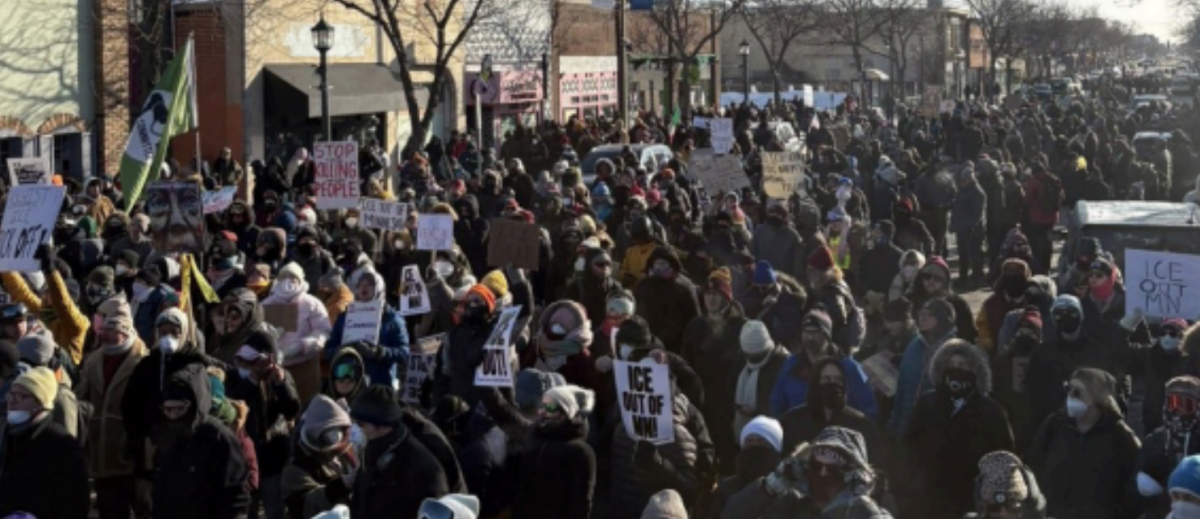
After Operation Metro Surge began in Minneapolis, students across the state found themselves responding to events that were both urgent and unavoidable. What started as news updates and social media posts quickly became personal, as drives, fundraisers, protests, vigils, and clashes unfolded in real time. I attended the vigil for Renée Good the night she was killed, went to multiple protests throughout the city, and stood at the scene where Alex Pretti was killed as federal agents confronted protesters. I also organized transportation from school and worked to raise awareness so other students could participate. For many of us at Breck, Operation Metro Surge was a lived experience that followed us back into classrooms and conversations rather than a distant political issue, a disruptive change to our lives and academic journeys.
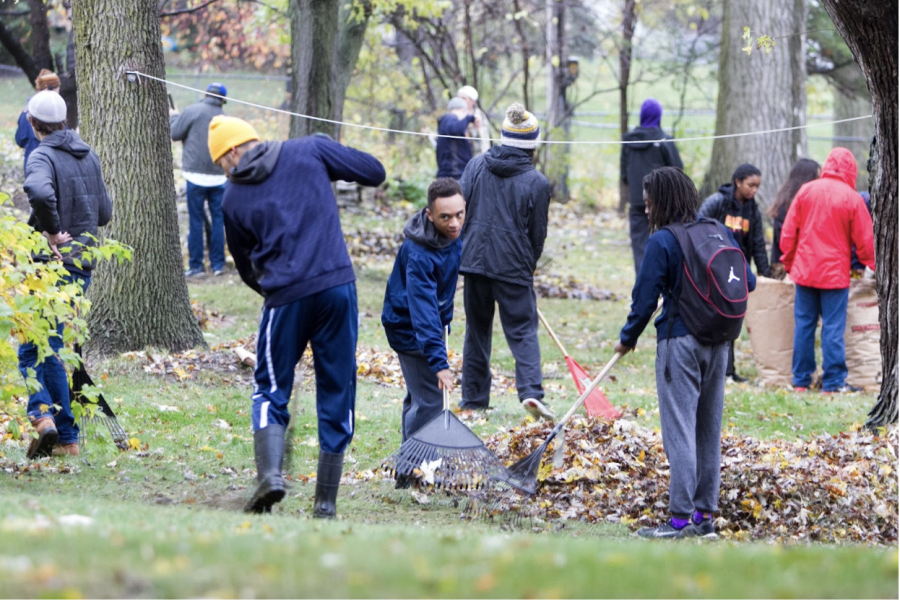
Student action took many forms, from conversations among peers to organized efforts like supply drives and protests. Towards the beginning of the operation, soon after the murder of bystander and legal observer Renée Nicole Good, a group of students and I came together to discuss how students at Breck could show up for their community and partake in civic engagement. We formulated an unofficial Breck organization where we planned transportation and spread the word about a downtown protest during the statewide economic shutdown that took place two weeks later. In that same meeting, students on the Community Action Council took charge and established a supply drive that would continue for the next few weeks in order to support families and residents affected by the ICE occupation. Beyond this, ICE’s occupation was a topic of conversation for many students across the school, contributing to an environment of discussion, civic debate, and a sense of community among people who were fearful, angry, and distressed.
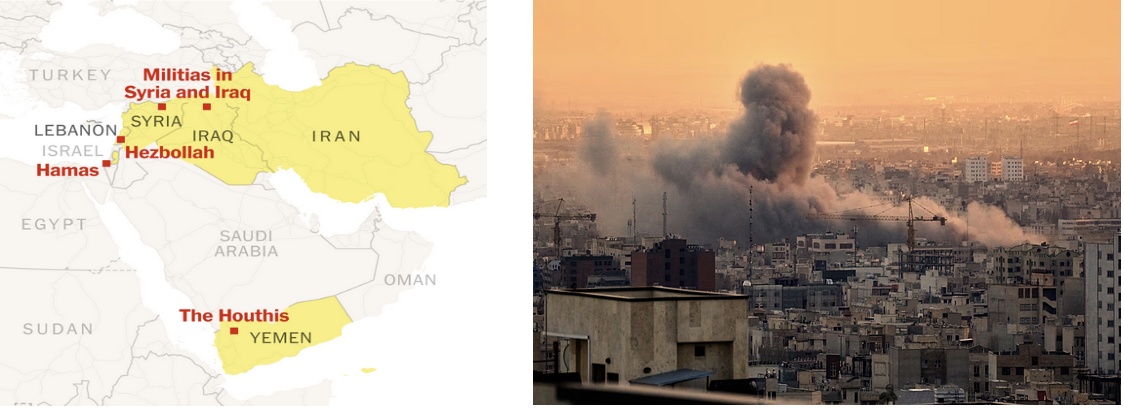
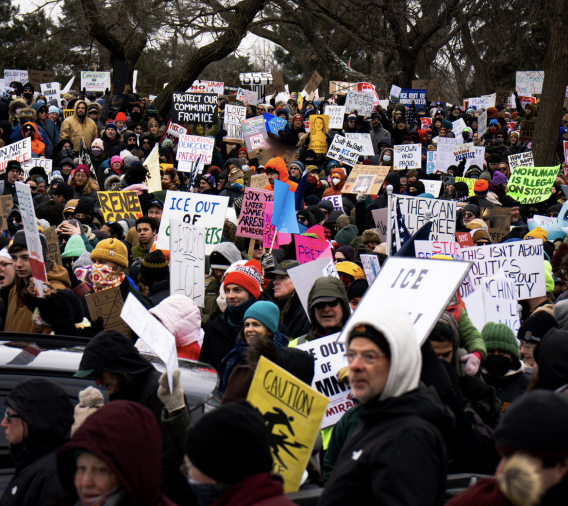
Being physically present at sites of confrontation and unrest reshaped how students understood protest, authority, and risk-taking. Upon the morning of the de facto execution of Alex Pretti, a 37-year-old nurse for the United States Department of Veterans Affairs, I traveled with a close friend of mine, Ben Whittaker ‘26, to the scene where Pretti was murdered and witnessed clashes between federal agents and protestors. We saw protestors being tear gassed, flashbanged, and pushed backwards by both the federal agents and the Minneapolis Police Department, a grand show of authority and violence from the two, even as protestors remained peaceful, chanting and forming barricades with dumpsters, traffic cones, and tires. Ben and I were also tear-gassed, but were fortunate that shops and restaurants along the street were providing water, masks, and medical care for protestors harmed by authorities. It was a chilling scene, something I never thought I’d experience, but the actions taken by regular members of the community moved us that day. These feelings were a recurring theme throughout the occupation, as well as during peaceful marches and protests organized in downtown Minneapolis and Powderhorn without the imminent threat of federal agents at the scene. Many students partook in these protests with signs and voices that took charge and joined together with the many chants coming from other groups in the crowds. These protests were rooted in love, community, sadness, anger, and hope, feelings felt by the entire crowd which partook in the protests.
What stays with me most from this period isn’t just the scale of the operation, but how so many members of the community stepped up and used their voices to take action against the occupation of Minneapolis. The students at Breck came together for the people around them, as well as for people they didn’t even know, during a time of widespread uncertainty and fear.
Kristin Sandstrom Markert • Apr 8, 2026 at 3:12 pm
Thank you for writing this. It’s important that we all know and remember the pain and damage caused to MN by Metro Surge and the federal government. Your descriptions brought back all the memories. Our family was also involved in different resistance efforts. We helped buy and deliver food, we marched and made signs. We bundled up and did the Alex Pretti memorial bike ride on January 31. We joined several Signal groups, patrolled, and witnessed. Like you, I’ll remember the feeling of unity with other Minnesotans. I will also remember my anger at the architects and supporters of Metro Surge. I will remember that at the ballot box.